
Vantage View | Healthy Snacking Startups in India – Sustainable Scalability or Marketing Mirage?
As India’s healthy snacking market surges past ₹30,000 crore, can startups balance premium pricing, transparency, and mass-market scalability?

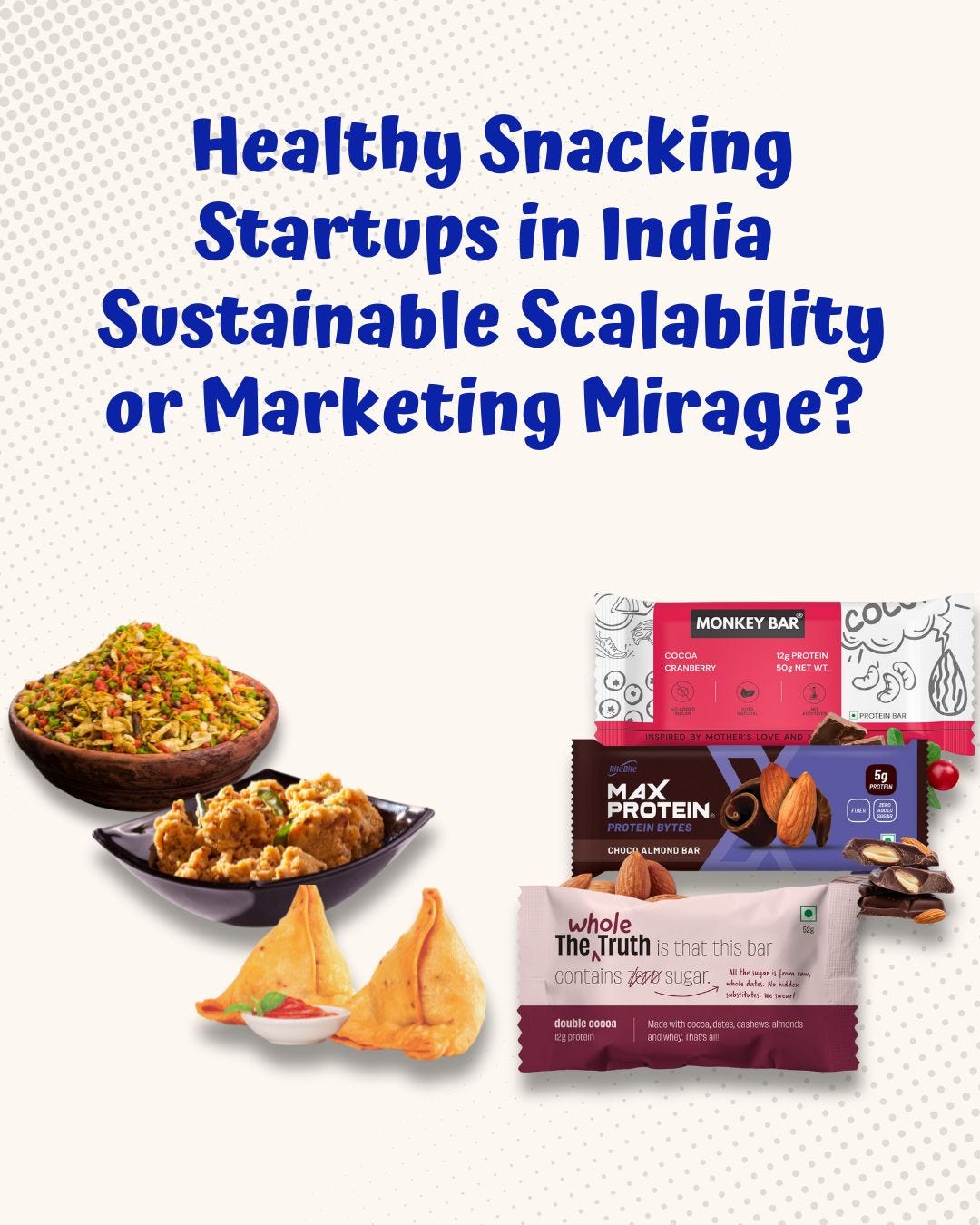
Rise of Healthy Snacking
Healthy snacking in India isn’t just a metro fad anymore—it’s morphing into a full-blown food revolution. From protein bars to millet puffs, the market now stands at a substantial ₹22,000–₹30,000 crore (FY24 estimates, which also account for contributions from established players) and is expected to hit ₹50,000 crore by 2030, growing at a 7–9% CAGR, outpacing traditional snack segments. With over 63% of Indian consumers actively seeking healthy snack options and nearly 50% reading ingredient labels before purchase, there’s clear demand for change.
Leading the charge are brands like The Whole Truth (₹71 crore in FY24 revenue), Yoga Bar (acquired by ITC at a ₹450 crore valuation), and Slurrp Farm (₹42 crore in FY23, backed by ₹60 crore in new funding). Yet, despite the impressive growth numbers, a slowdown in new innovations and product launches has been noted, signaling a potential shift in the competitive landscape.
Claims vs. Reality: Transparency and Ingredients
The skincare industry taught us to be skeptical of lofty wellness claims—and healthy snacks are under similar scrutiny. Thankfully, the top players are holding themselves to higher standards. The Whole Truth, for instance, posts full ingredient lists on the front of every pack, often stating “Dates 30%, Almonds 20%, Whey 15%…” and so on. No preservatives, no refined sugar—just real food. Yoga Bar, with its whey protein bars and oat-based cereals, made nutrition convenient and appealing, especially to young urban professionals. Meanwhile, Slurrp Farm uses ancient grains like ragi and jowar to create kid-friendly snacks—think pancake mixes and millet noodles.
Unlike skincare, where results are subjective and delayed, food offers instant feedback. These startups don’t just talk about “better for you”; they back it up with clean labels, science-based nutrition claims (e.g., protein grams, fiber content), and lab-tested results. But let’s not forget, even jaggery is still sugar. Transparency and moderation matter as much as marketing.
Channel-Model Fit: D2C Vs Multi Channel-Weighing out the Costs and Benefits
One of the big unlocks for healthy snacking has been digital-first distribution. D2C models allowed these brands to bypass traditional kirana networks and reach health-conscious consumers directly via Instagram, Amazon, BigBasket, and their own websites. But as Slurrp Farm’s entry into 5,000+ retail stores shows, offline retail is where the real scale kicks in. Quick commerce (e.g., Zepto, Blinkit) and modern trade (DMart, Nature’s Basket) help bridge that gap.
Yet, the channel-model fit isn’t without trade-offs. Online channels bring high acquisition costs and logistical challenges. Offline, margins shrink but volumes improve. That’s why Yoga Bar, after raising capital, focused on omni-channel reach before ITC scooped it up. The Whole Truth, too, is pushing into physical retail, with in-house manufacturing to control quality and costs.
A crucial challenge in scaling remains pricing and accessibility. Smaller pack sizes are growing 60% faster than traditional small packs, as per NielsenIQ (NIQ), offering an entry point for price-sensitive consumers. Brands looking to expand beyond metros may need smaller SKUs (e.g., single cookies for ₹10, millet drink mix sachets for ₹5), or regional adaptations—an approach legacy FMCG brands have mastered.
Digital Evangelization and the TAM Explosion
Let’s talk Insta and Shorts. This sector is thriving not just because the products are better, but because they look and sound better, too. From influencer reviews to founders posting label literacy tips, social media has become the go-to education hub. Nutritionists, fitness coaches, and mommy bloggers are shaping purchase decisions. This influencer-driven narrative has done what traditional ad campaigns couldn’t: it has built trust and sparked curiosity.
That’s directly affecting TAM. Where once healthy snacks were reserved for gym-goers, now they’re part of the school tiffin box, the office pantry, and the midnight craving fix. A NielsenIQ report noted that smart snacking is growing 1.2x faster than traditional snacks, and consumption is rising twice as quickly in Tier 2 and Tier 3 cities. Even rural areas are now showing similar growth trends to urban centers, indicating a wider consumer shift.
This is also fueled by changing fitness habits—NIQ’s study found that 84% of urban consumers exercise regularly, and 48% use a fitness or exercise app. With digital health awareness at an all-time high, the demand for better snacking options is no longer limited to metros.
Looking Forward
Here’s the thing: this movement has real potential—but only if brands stay honest and inclusive. ₹100 bars won’t change Bharat’s diet. Smaller, more affordable SKUs, regionally adapted formats, and leveraging economies of scale will be critical for long-term growth.
The Whole Truth’s transparency, Slurrp Farm’s millet-mission, and Yoga Bar’s scalable playbook offer different models—but they all reflect the same truth: good food is the best marketing. At the same time, healthy snack startups must navigate the realities of scale—balancing premium vs. mass-market pricing, offline expansion, and operational efficiencies.
So, is healthy snacking in India a marketing mirage or a sustainable shift? From this vantage point, it looks real—if executed with discipline. The future of snacks isn’t just tasty; it’s thoughtful, trusted, and, hopefully, accessible to many more Indians with each passing year.’